Crazy Challenge: Mini Games 3D
Fried Chicken GamesArcade
4.6196.00 Reviews
- Version
- 3.0.1
- Installs
- 10.00M
- Age Rating
- Teen
Screenshots


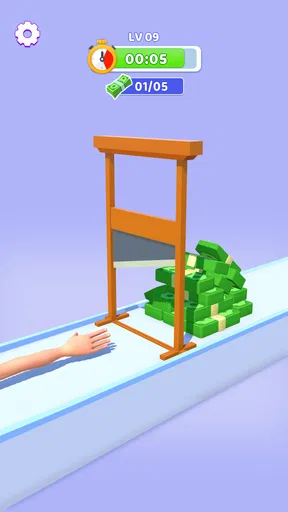
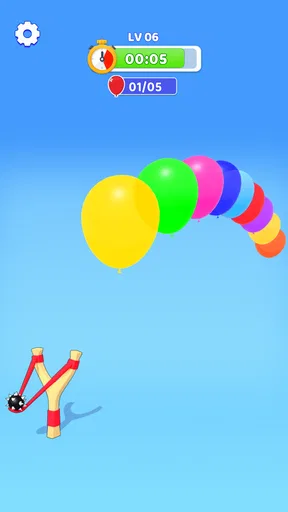
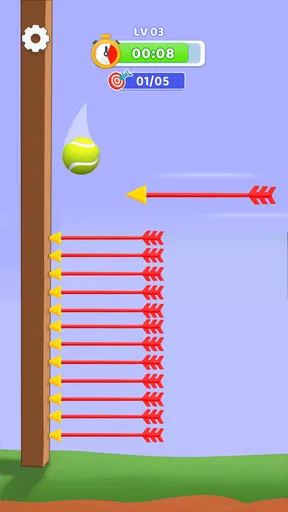
Our Review of Crazy Challenge: Mini Games 3D
 Analysis by Appyee
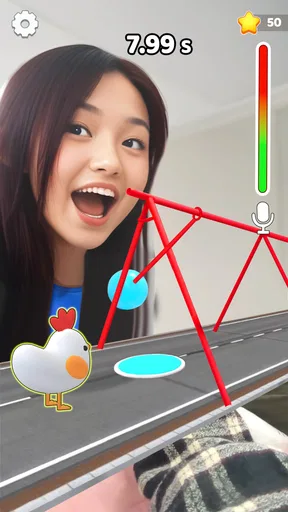
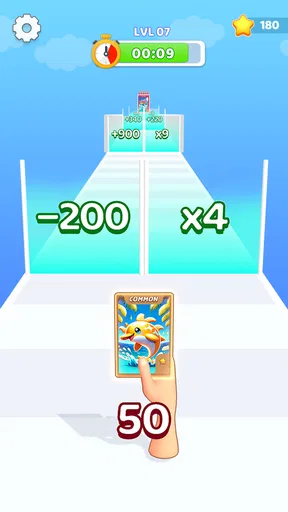
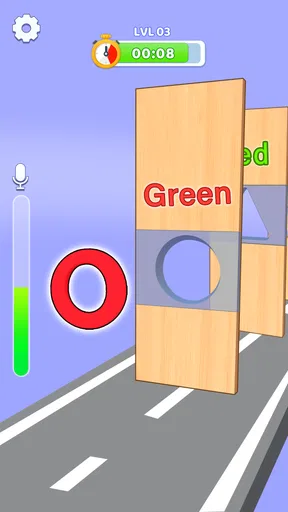
I went into Crazy Challenge: Mini Games 3D expecting a quick arcade distraction, and that is exactly where it works best. It is a collection of short three-dimensional challenges from Fried Chicken Games, built around the simple appeal of opening the game, choosing a mini game, and trying again when a round goes wrong. The presentation is easy to understand, while the variety keeps the experience from feeling like one repeated test.
That simplicity is also the most important thing to understand before installing it. This is not a story-driven adventure, a deep competitive simulator, or a long-form puzzle game. It is better suited to small gaps in the day: a few rounds while waiting, a short break between tasks, or a relaxed session when I want interaction without a complicated setup. The game is free to download, though individual in-app purchases range from $2.99 to $9.99.
How the mini-game workflow feels in everyday use
The basic routine is pleasantly direct. I launch the game, move into a challenge, learn what the round wants from me, and decide whether to continue immediately or take a break. That quick loop matters because arcade games live or die by how much effort they put between the player and the next attempt. Here, the central attraction is the succession of small activities rather than a large world that needs to be explored first.
For a realistic everyday example, I could play it during a ten-minute coffee break. I would not need to remember a complicated plot or rebuild a character after being away. I can make a few attempts, stop when the break ends, and return later without the game demanding a long commitment. That makes it more practical than many conventional mobile games that are designed around extended sessions, daily chores, or constant progression.
The three-dimensional presentation gives the mini games a more physical feel than a flat collection of menus would provide. Objects, spaces, and movement are easier to read when the challenge is presented in a compact 3D scene. I found that this helps the game feel playful even when the underlying task is straightforward. It does not turn every activity into a sophisticated simulation, but it gives the collection a recognizable identity.
The best way to approach the opening sessions is to treat them as orientation rather than as a serious test of skill. I pay attention to the goal, notice which actions are actually necessary, and avoid rushing simply because the challenge looks easy. In short arcade rounds, a careless first move can waste more time than a calm observation would. That habit becomes especially useful when I replay a mini game and already know the broad shape of the task.
One practical strength is that the game can appeal to people who do not normally commit to a single arcade mechanic. If I become bored with one type of challenge, the collection format gives me a reason to try another instead of leaving the app immediately. On the other hand, players who prefer one deeply developed system may find the variety less satisfying. The game spreads its attention across mini games, so it is not trying to offer the depth of a dedicated puzzle, racing, or action title.
What I check before settling into a session
Because each mini game can ask for a different kind of attention, I do not use exactly the same rhythm for every round. Some challenges are easier when I act quickly, while others reward looking at the scene first and identifying the safest sequence. My repeatable habit is simple: understand the objective, make one controlled attempt, then adjust only the part that caused the failure. That prevents random tapping from becoming my main strategy.
I also recommend playing with a stable grip. On a small phone, fingers can cover part of the scene or make a swipe less precise, and that problem is more noticeable in compact 3D challenges than in a purely menu-based game. Holding the device comfortably and keeping the active area visible sounds obvious, but it reduces avoidable mistakes. It is a small improvement that costs nothing and makes the game feel less frustrating.
The game is listed for Teen audiences, which is worth considering when deciding whether it belongs on a shared family device. That rating does not automatically tell me how every individual round will feel, but it does mean I would not present it as a universal children’s game without checking the experience personally. For older players, the tone is still accessible and light enough for casual use, but the age label should guide a parent’s decision rather than being ignored.
On the technical side, the current version is 3.0.1 and it supports devices running Android 6.0 or later. That gives the game a broad compatibility range, although compatibility alone does not guarantee the same smoothness on every phone. A newer device may handle 3D scenes more comfortably, while an older handset can make touch timing and visual responsiveness more important. I would keep other demanding apps closed if the game feels less responsive than expected.
Settings and habits that are actually worth checking
I would begin with the sound controls rather than leaving every option untouched. Mini-game collections often work well with audio, but they are also commonly played in places where sound is inconvenient. If the game offers the expected audio controls on your device, adjusting them before a public session makes the experience easier to manage. Playing quietly can also help me concentrate on the visual instructions instead of reacting to every sound cue.
Screen brightness is another practical adjustment. A darker display can make small objects and edges harder to distinguish in a 3D scene, while maximum brightness may be uncomfortable during a long session. I prefer a level that keeps the play area readable without making the phone distracting. This is not a hidden advantage in the game; it is simply a sensible way to make visual challenges less tiring.
I also check whether notifications are likely to interrupt a round. A short challenge can be ruined by an incoming alert covering the screen at the exact moment I need to tap or move. Using a device’s normal focus or do-not-disturb tools for a concentrated session is more useful than blaming the game for a missed input. The trade-off is that I might temporarily miss another notification, so I would only do this when I can afford the interruption.
Since the game is free but includes optional purchases, I would decide in advance whether I am comfortable spending anything. That decision is easier when I first play normally and see whether the core loop holds my attention without buying extras. I do not think a casual player should feel pressured to spend simply because a difficult attempt takes longer than expected. Setting a personal limit is a better habit than making a purchase in the middle of frustration.
Another useful preparation step is to make sure there is enough uninterrupted time for a few attempts. Although the game is designed for short play, I get more from it when I can repeat a challenge immediately and compare what changed. If I am constantly switching between apps, I may mistake distraction for difficulty. A calm two-minute test tells me more about the controls than a scattered session of single attempts.
Faster patterns for improving without guessing
The fastest improvement comes from separating recognition from execution. On the first attempt, I focus on what the game is asking. On the next, I try to reproduce the successful parts and change one decision. This is more efficient than changing direction, timing, and tapping style all at once. When a round is short, that controlled repetition makes progress feel measurable even without a complicated progression system.
I also avoid overcorrecting. In a 3D scene, a large movement can create a second problem while I am trying to fix the first one. Smaller inputs give me more room to observe what the game considers a successful action. This is especially helpful for players who normally rely on fast swipes in arcade games. Here, speed is useful only when the challenge actually rewards it; otherwise, precision is the better shortcut.
A good personal routine is to identify the failure category after every unsuccessful attempt. Was I too early, too late, too close to an obstacle, or simply looking in the wrong place? Naming the mistake keeps the next round focused. It also prevents the common arcade habit of repeating the same movement with more force and hoping the result changes.
When I find a mini game I enjoy, I give it a few consecutive attempts instead of immediately jumping away. That helps me learn whether I genuinely like its mechanic or only liked the novelty of the first try. Conversely, if a challenge feels irritating after several calm attempts, I move on rather than treating persistence as a requirement. The collection format is valuable precisely because it allows that choice.
Players who want a more relaxed experience can use a different goal: completion is optional, while learning the interaction is the reward. I find this approach fits the store’s promise of calm, casual play better than treating every round like a tournament. Players seeking leaderboards, ranked competition, or a long-term mastery ladder may prefer a more specialized arcade game instead. Crazy Challenge is strongest when I judge it by its short, varied activities.
Where the variety helps, and where it reaches its limit
The collection format creates a useful balance between repetition and freshness, but it also introduces unevenness. Not every mini game will appeal equally to every player, and the change of mechanic can interrupt the satisfaction that comes from mastering one system. I enjoy having alternatives, yet I would not choose this title if my main goal were to perfect a single control scheme over many hours.
The three-dimensional design can make challenges more inviting, but it may also make some actions less immediately readable than they would be in a flat arcade game. Depth, perspective, and object placement can require a moment of interpretation. That is part of the charm, though it can feel like friction when I know what I want to do but the scene does not make the correct interaction obvious at first glance.
There is also a difference between relaxing and effortless. A calm presentation does not mean every attempt will be easy. Some players will enjoy the small pressure of solving a challenge quickly, while others may find repeated failure breaks the relaxed mood. I would recommend it to someone who likes low-commitment trials and does not mind restarting. I would skip it for a player who wants a completely passive experience with no need to react.
The Teen content rating is another reason to choose the audience carefully. I would be comfortable describing the game as casual arcade entertainment for older children and adults who fit that rating, but I would not use the phrase “for all ages” as a substitute for checking suitability. Parents should make the final call based on the person using the device, especially when the game is being installed for a younger player.
The purchase model can affect the feel of the experience depending on how someone plays. A patient player who treats the app as a free sampler may find enough value in the variety without spending. Someone who wants to unlock or accelerate everything may encounter a different relationship with the game, because optional purchases change the cost of turning casual play into a more committed hobby. I see the free entry point as a strength, provided I keep those spending choices deliberate.
Who should install it, and who should choose something else
I would recommend this game to someone who wants a compact arcade collection rather than one large campaign. It suits commuters, people taking short breaks, and players who like trying different interactions without learning a complex ruleset. It is also a reasonable choice for a friend who enjoys quick retries and playful 3D presentation but does not want a competitive online environment.
I would be more cautious about recommending it to someone with limited patience for trial and error. Mini games depend on discovering the right response, and the experience can become repetitive if a player dislikes restarting. Likewise, anyone looking for a story, detailed character development, or a deep upgrade system should choose another type of mobile game. The title’s appeal comes from variety and immediacy, not from a large progression journey.
Compared with a traditional single-mechanic arcade game, this one gives me more variety but less opportunity to build a specialized skill. Compared with a large casual game packed with daily missions, it feels easier to pick up because there is less commitment around each session. Compared with a puzzle game, it may offer more physical interaction and visual movement, but it may not provide the same satisfaction for someone who wants carefully layered logic. Those differences make the choice fairly clear.
For a first session, I would play without making a purchase, adjust the phone for comfortable visibility, and give several different challenges a fair attempt. I would then decide whether the variety is keeping me interested or merely delaying the search for a deeper game. That test answers the most important practical question: whether I enjoy the collection itself, not just the first few minutes of novelty.
My verdict after building a repeatable play style
Crazy Challenge: Mini Games 3D succeeds as a free arcade sampler that respects short sessions. Fried Chicken Games has chosen an approachable format: small 3D challenges, quick retries, and enough variation to make the next round worth trying. The game has reached over 10 million installs and holds a 4.6 average from around 68 thousand ratings, which matches my impression that its straightforward format has broad casual appeal.
My strongest advice is to play it with a light but deliberate routine. Check the phone’s comfort settings, keep the screen clear of interruptions, observe the first attempt, and change one action at a time on the next. Those habits make the collection feel more rewarding and reduce the frustration that comes from random tapping. They also reveal which mini games genuinely suit your reflexes and which ones are better left behind.
I would not call it a replacement for a deep arcade favorite. Its limitations are tied to its design: variety can come at the expense of depth, 3D presentation can sometimes require extra visual interpretation, and optional purchases deserve sensible boundaries. Still, for a quick break or a relaxed set of short challenges, I think it earns a place on an Android device that meets the minimum system requirement.
My final recommendation is therefore specific rather than universal: install it if you want a low-commitment collection and enjoy learning small mechanics through repetition. Skip it if you need a substantial campaign, serious competition, or one finely tuned system to master. For the right player, the free starting point and compact sessions make it easy to try, while the varied 3D challenges provide enough flexibility to keep casual play from becoming immediately stale.
Verdict
Strengths of Crazy Challenge: Mini Games 3D
- Quick mini-games are ideal for short breaks.
- Simple controls make most challenges easy to understand.
- Bright 3D visuals give the game a playful style.
- A wide variety of tasks helps keep sessions varied.
- Works well for casual players seeking lightweight entertainment.
Limitations of Crazy Challenge: Mini Games 3D
- Some challenges can feel repetitive after extended play.
- Difficulty may vary noticeably between different mini-games.
- Frequent ads can interrupt the flow between challenges.
- Limited depth may not satisfy players seeking long-term progression.
- Performance may drop on older or less powerful devices.
Other Releases by Fried Chicken Games
View All
Bakery Stack: Cooking Games
Casual3.9

Build a Doll
Casual4.4
Similar Picks in This Category
View All
Subway Surfers
SYBO Games4.6

Stickman Party 234 MiniGames
PlayMax Game Studio4.6

Subway Princess Runner
Ivy4.4

Temple Run
Imangi Studios4.2

Zombie Tsunami
Mobigame SAS4.6

Stack Ball - Crash Platforms
CASUAL AZUR GAMES4.5
Frequently Asked Questions
What is Crazy Challenge: Mini Games 3D?
Crazy Challenge: Mini Games 3D is a casual collection of short, fast-paced challenges designed for quick entertainment. Instead of following one long adventure, you move through different mini-games that test timing, reflexes, attention, and simple problem-solving skills. The colorful 3D presentation and straightforward controls make it approachable for casual players, although some challenges can become surprisingly demanding as you progress.
How do you play Crazy Challenge: Mini Games 3D?
Gameplay is based on completing individual mini-games by following simple on-screen instructions. Depending on the challenge, you may need to tap accurately, swipe at the right moment, avoid obstacles, react quickly, or complete a small objective under pressure. Most rounds are easy to understand without a tutorial, but success often depends on learning the timing and recognizing what each level expects from you.
Is Crazy Challenge: Mini Games 3D suitable for children?
The game is generally suitable for children and casual players because its mechanics are simple, colorful, and easy to learn. However, parents should still review the age rating and the advertising or in-app purchase information shown on the relevant app store. Some challenges may become frustrating for younger players, and supervision is recommended if the device is linked to payment methods.
Does Crazy Challenge: Mini Games 3D require an internet connection?
Many mini-games may be playable without a constant internet connection, which makes the app convenient for short sessions while traveling or when mobile data is unavailable. Nevertheless, certain features can depend on connectivity, including advertisements, updates, analytics, or possible online content. For the most reliable experience, open the game once while connected and check which functions remain available offline.
Is Crazy Challenge: Mini Games 3D free to download and play?
Crazy Challenge: Mini Games 3D can generally be downloaded at no initial cost, allowing users to try its mini-games before deciding whether to continue. Free versions commonly include advertisements and may offer optional in-app purchases, such as removing ads or accessing additional content. Before downloading, check the current store listing for pricing, permissions, supported devices, and purchase details.
Play our best games!


